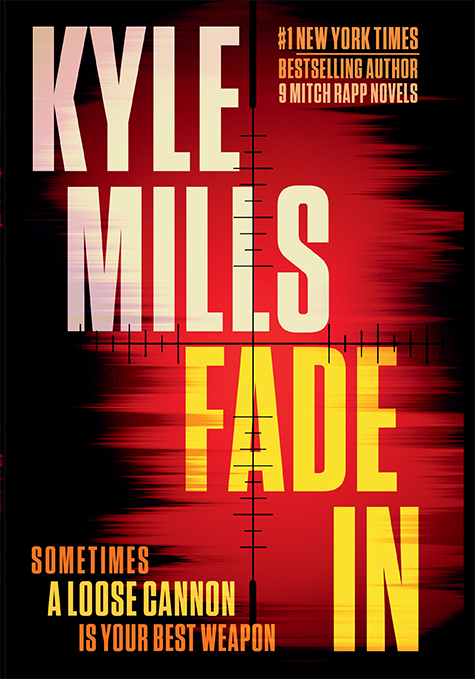
l love the new year because it’s when I get to reflect on my books and see how well my crystal ball has been working. I seem to have nailed it with Fade In, which is kind of good news bad news. The world becomes a more terrifying place with every passing year.
When I left the Rapp series, I set out to write a book that closely tracked what was unfolding around us. It’s no surprise that there are already a few sinister parallels to real life. I have no doubt there will be more as time marches on.

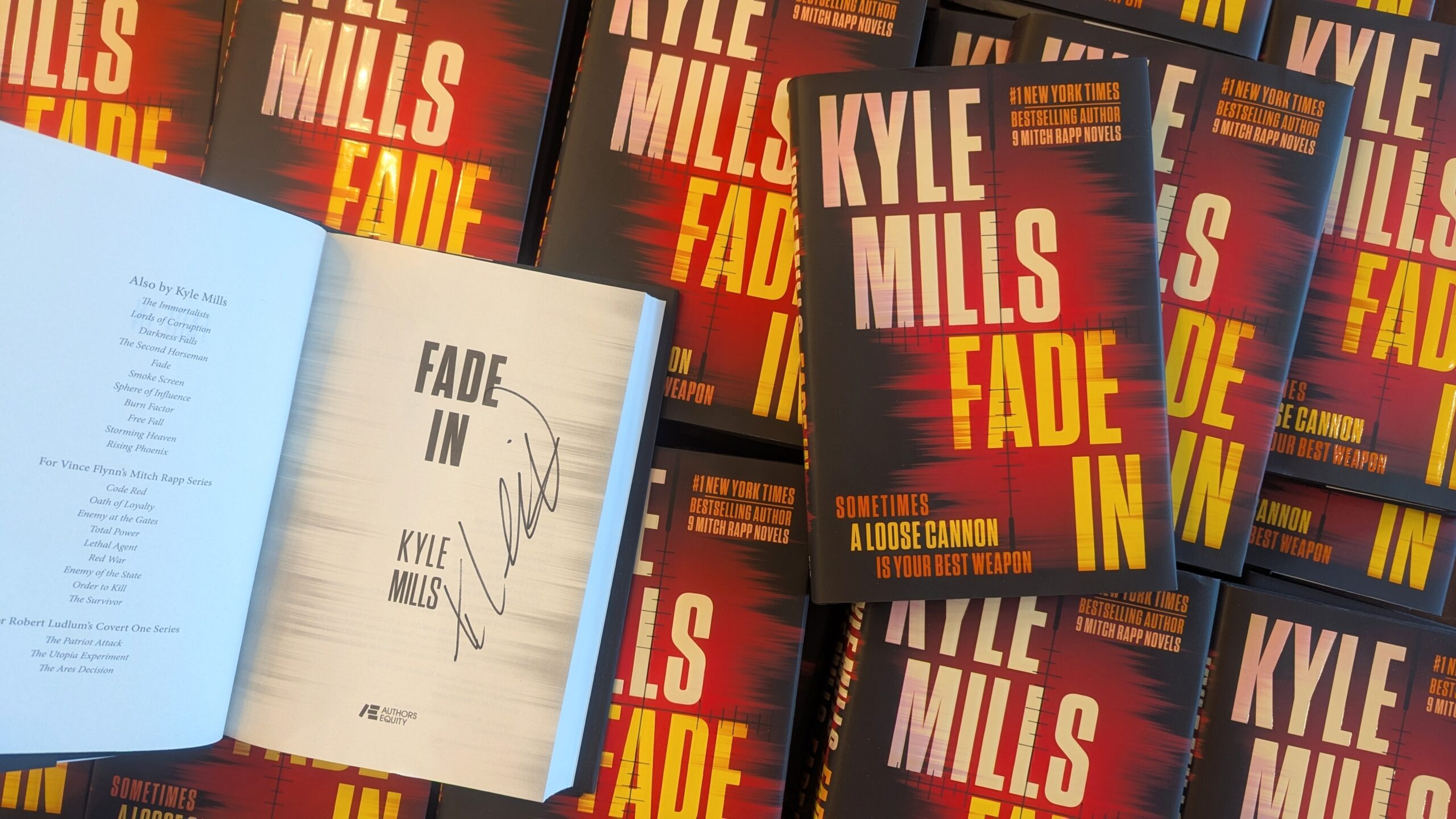
Fade In
The premise of this book is that—unknown to the Chinese government—scientists at the Wuhan lab were creating a bioweapon that would target the elderly. COVID-19 was an inadvertent leak of an earlier version of the virus under development.
As Fade In was being edited, the White House came out strongly for the lab leak hypothesis.
My antagonist believes that the world is dominated by rulers who have become so old and entrenched that society can no longer progress. In his mind, the grip of the gerontocracy (as it’s come to be known) has to be broken before it’s too late.
After I read this article about a congresswoman living in a memory care facility, I started to wonder if he has a point.
In my book, the Chinese formed a committee including scientists, propaganda specialists, medical professionals, and intelligence operatives to try to develop a way to turn around the population collapse that China seems to be headed toward.
I’ve seen reports of Chinese government officials calling women, asking when their last period occurred, and urging them to get pregnant. But the recent moves to make condoms more expensive is new.
It’s just the kind of thing a committee like the one I imagined would devise. A first step toward much more sinister edicts, I fear.
Another theme in the book is one that’s extremely important but largely ignored. While people talk a lot about rising financial inequality, they rarely discuss the growing inequality in health and life expectancy. The wealthy are putting a lot of resources into therapies that enhance their vitality and longevity—resources that the average person doesn’t have. It’s easy to see a day when the wealthy and powerful will live well into their hundreds while people on the other end of the spectrum will see their life expectancies stagnate or even decline. So, while you might die at 75, your local congressman will be in power for a century.
The Ares Decision
I penned the Ares Decision for a series created by Robert Ludlum in 2011. The main character is an Army infectious disease specialist, and the story kicks off with him handling a measles outbreak in the Dakotas.
At the time, the belief that the MMR vaccine caused autism wasn’t terribly widespread and seemed largely confined to the political left. Despite the weakness of the link, though, the movement seemed to be gaining strength. Now it’s expanded to encompass all vaccines, myriad pathologies, and both sides of the political spectrum.
Sadly, we’re starting to see rising rates of the disease in very much the way the book describes.
Want to read more about my past predictions? See last year’s Stranger Than Fiction 2025: Predictions Part 1 and Part 2.